


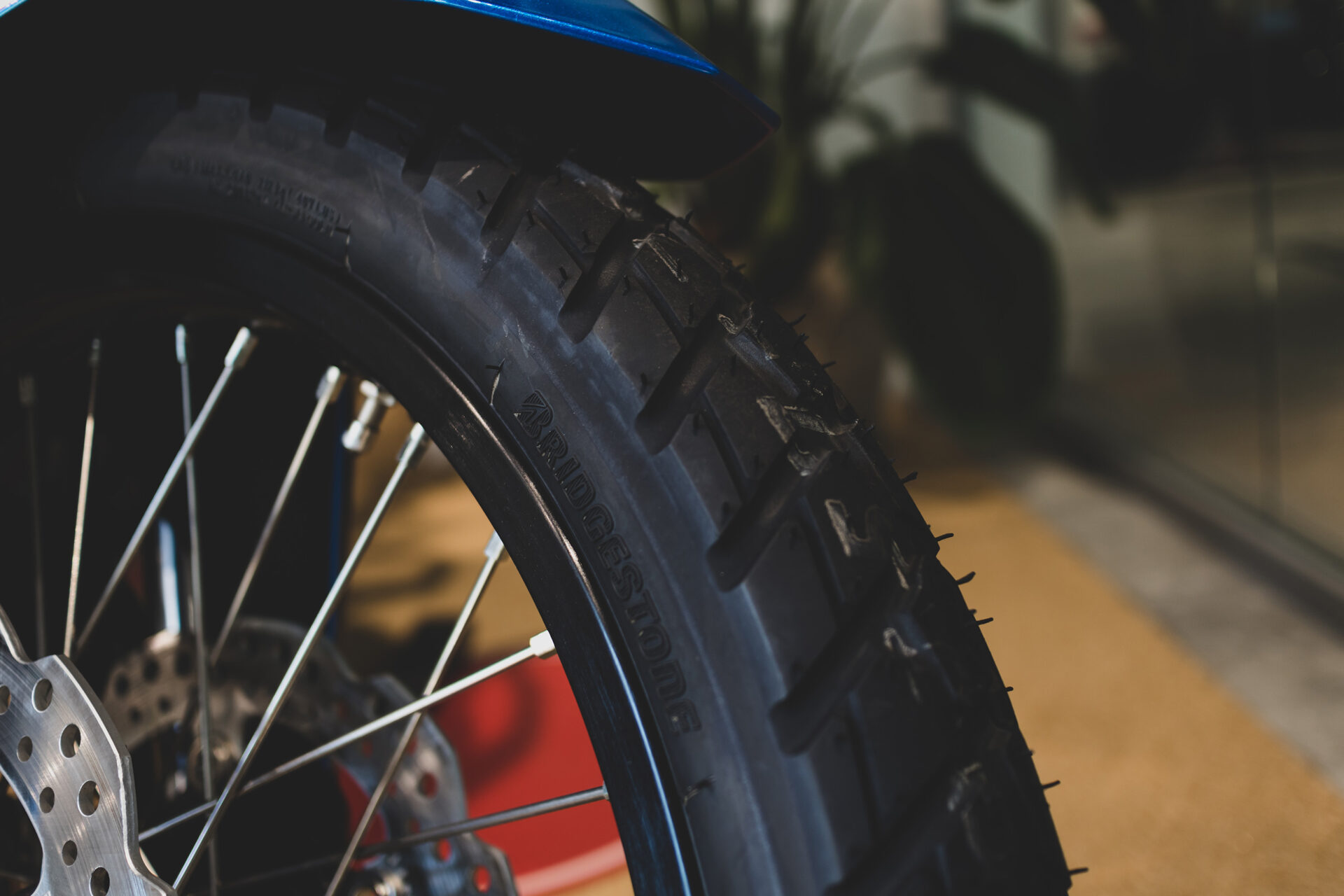
A high percentage of the population waits to see that there is no tread left on the tire to go to the workshop and change it, but wear and tear is not the only reason that will require us to change the tires of our motorcycle.
Let’s take a look at some examples:
- Deformity caused by irregular wear. Even if we have not reached the limit of the warning devices, we may find that our tires have an irregular wear that leads to a deformity in the tire. This deformity will not only make the driving of our motorcycle uncomfortable, but it can also pose a risk to our safety. For example, in heavier motorcycles or motorcycles that are mostly used in the city, the central part of the bike tends to wear more than the sides, causing a sliding that means less contact surface when leaning the bike. This also happens when the tire pressures are incorrect, especially when they are lower than they should be.
- “Expiration” or loss of properties. Although it is not possible to establish an expiration date as such, we are all aware that the passage of time does not spare tires, which lose their properties, especially in areas closer to the coast or if we always leave them outdoors. The conservation period will depend on various factors such as the environment, whether the motorcycle is stored on a raised surface or in direct contact with the ground, the humidity of the area, extreme temperatures, etc. One way to identify if our tire is “out of date” is by observing its color, they generally acquire a brownish tint and, when touched, will appear stiff. We can also check it by passing a nail over it, if a whitish line is marked it means that the tire is “dry” and it will be convenient to change it. It is not uncommon to find people who carry expired tires thinking that their tire “is good because it does not wear out”, overlooking the fact that it is a tire that no longer offers the necessary adherence and elasticity, posing a risk both for themselves and for the rest of the occupants of the public road.
- Punctured tire. Most of us have been – or will be – in the situation of puncturing a new tire. Although it can be quite a hassle, the most advisable thing to do in these cases is always to replace the tire with a new one, since repairs do not offer any guarantees. A repaired tire can cause the casing to crack, with the consequent risk of an accident.
- Own wear beyond the indicators. In the majority of tires we find wear indicators that give us a reference of the moment in which it is recommended to change the tire since the remaining part of the compound does not offer the same performance, posing a risk for us. In studded tires we will not find these warnings so we will have to control the amount of remaining stud and be able to assess whether it continues to offer adherence or not.
In case of doubt remember that you can come to see us and we will advise you without obligation. Moreover, if you need tires don’t forget to ask us about the promotions and offers you can benefit from.